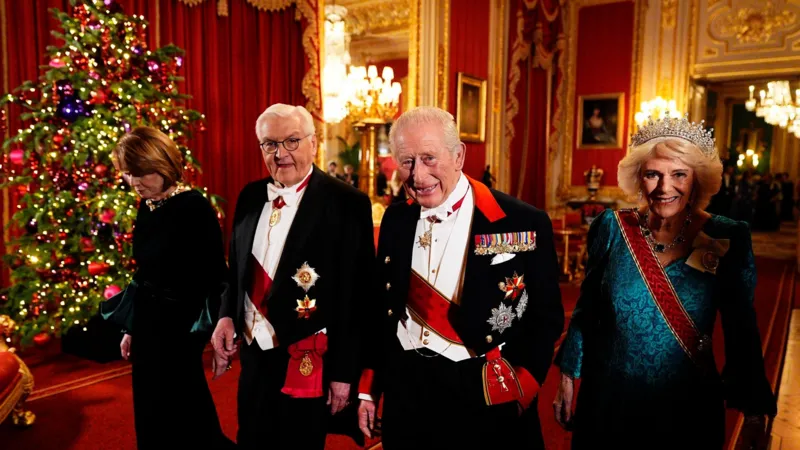

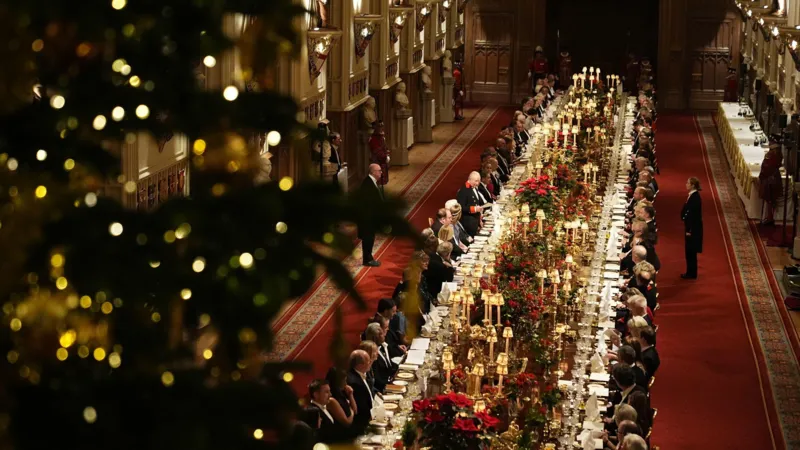
The great St George’s Hall at Windsor Castle had been transformed into a winter wonderland. A towering 20-foot Christmas tree, ablaze with thousands of twinkling lights, cast a warm glow over the long banquet tables below. On this crisp Wednesday evening, 152 guests filed into the historic space, their formal attire glittering beneath the vaulted ceiling, for what would be the first German state visit to Britain in nearly three decades.
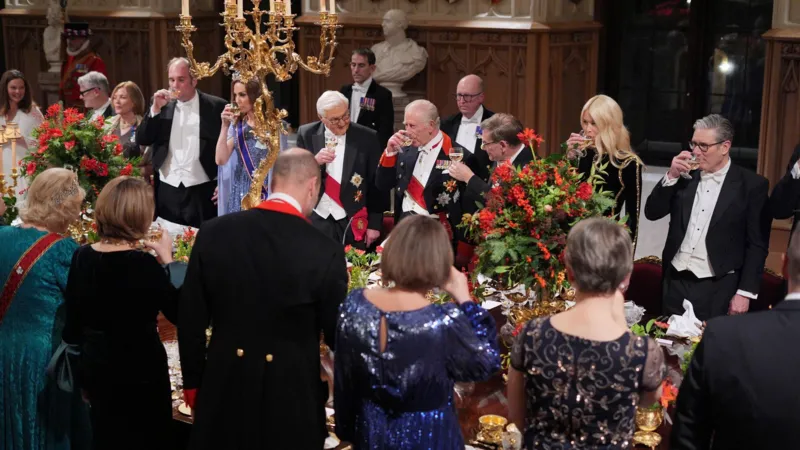
King Charles stood to welcome German President Frank-Walter Steinmeier, and as he began to speak—switching effortlessly between English and German—the room fell silent. The King’s words carried weight beyond the festive decorations surrounding them. Ukraine, he said plainly, needed the support of Western allies against Russian aggression. Britain and Germany, he declared, stood together in this cause.
President Steinmeier nodded in agreement from his seat. When his turn came to speak, he echoed the King’s commitment: Germany would remain “side by side in support of Ukraine.” Then, with a lighter touch, he gestured toward the magnificent Christmas tree dominating the hall. That tradition, he reminded the guests with a smile, had arrived in Britain from Germany in 1800, brought by Queen Charlotte herself.

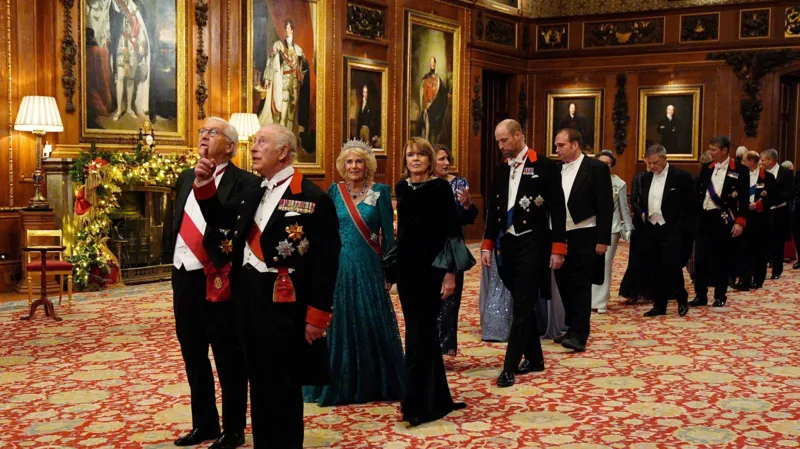
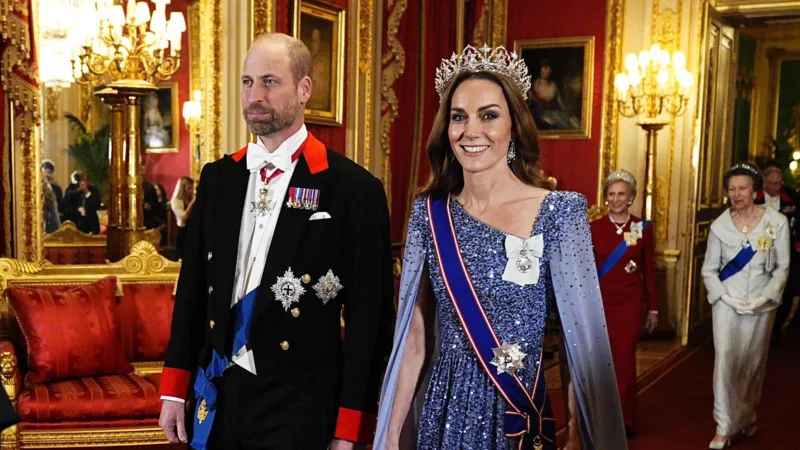
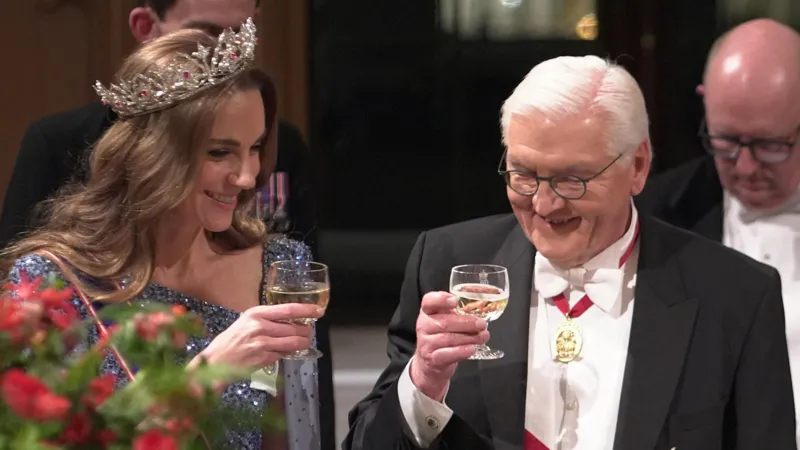
Around the tables sat an eclectic mix of power and celebrity. Supermodel Claudia Schiffer found herself seated beside Prime Minister Sir Keir Starmer. Hans Zimmer, whose film scores had moved millions, was there, as was the renowned violinist Anne-Sophie Mutter. The royal family had turned out in force—Queen Camilla, the Prince and Princess of Wales, the Princess Royal, and the Duke and Duchess of Edinburgh all present. Catherine caught the eye of many guests, wearing Queen Victoria’s stunning ruby and diamond tiara, a piece designed by Victoria’s German-born husband, Prince Albert—a fitting tribute to the intertwined histories being celebrated.
King Charles’s speech wove between past and present, shadow and light. He spoke of centuries of cultural exchange between the two nations, but also acknowledged “the most terrible consequences of conflict.” The decades since the Berlin Wall fell had brought tremendous change, he said—change that could feel “unsettling and even frightening.” Fear, he warned, breeds anger and resentment. What was needed now was a steadfast defense of democracy, freedom, and the rule of law.
But the King knew how to lift the mood. With a mischievous glint, he turned to football—that eternal source of British-German rivalry. He quoted the famous quip about matches between the two countries: “11 people play 11 people and then, in the end, Germany win!” Laughter rippled through the hall. He even managed to work in a joke about the horse-drawn royal coach being the “ultimate low-emissions vehicle.”
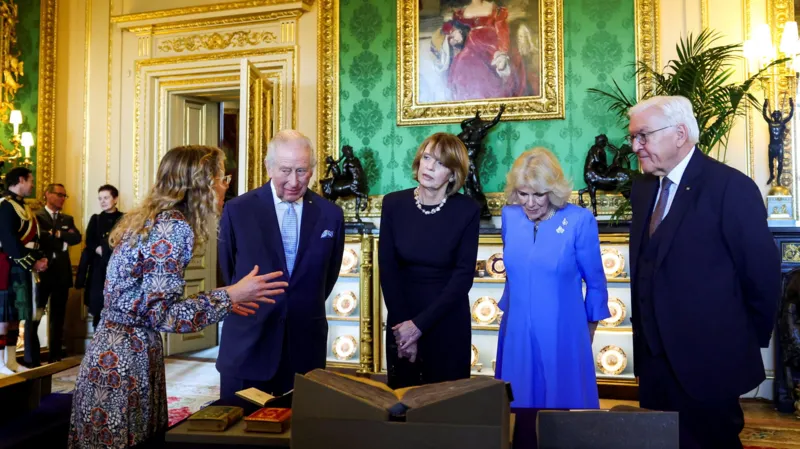
The feast itself told its own story of partnership. Guests began with tartlets of hot smoked trout topped with langoustines and quail eggs, followed by Windsor partridge wrapped in golden puff pastry, served alongside winter vegetables and crushed carrots and swede. Dessert arrived as a spectacular Baked Alaska with blackberry, vanilla, and raspberry ice creams. A specially created cocktail—made with cherry brandy and chocolate to evoke Black Forest gateau—accompanied the meal.
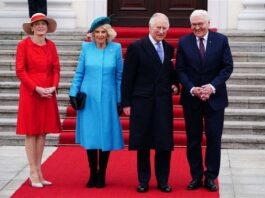
The banquet was the culmination of a day steeped in ceremony. That morning, President Steinmeier and his wife Elke Budenbender had arrived at Windsor to watch 850 service personnel and 150 horses parade across the manicured lawns in their honor. The gift exchange that followed revealed both diplomatic polish and a touch of humor. The Germans, perhaps acknowledging Britain’s famously rainy weather, presented the King with an umbrella. They also brought Bach’s Christmas Oratorio, Christmas ornaments, a nutcracker, and specialty cheese from a German eco-village. The King, in return, offered a horn-handled walking stick crafted on the Isle of Mull, a decorative plate, and—most charmingly—a first edition of Virginia Woolf’s biography of Elizabeth Barrett Browning’s dog, Flush.
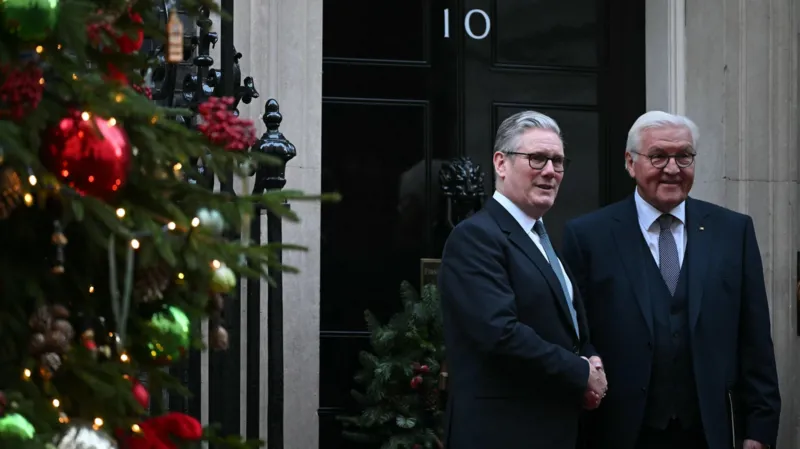
While the royals entertained, politics moved forward. President Steinmeier met with Prime Minister Starmer at Downing Street that afternoon, where he noted that relations between the countries were in “far better shape” after years of strain following Brexit. A new treaty signed in July had paved the way for deeper cooperation, he said—cooperation made urgent by “a new security situation in Europe, if not in the whole world.”
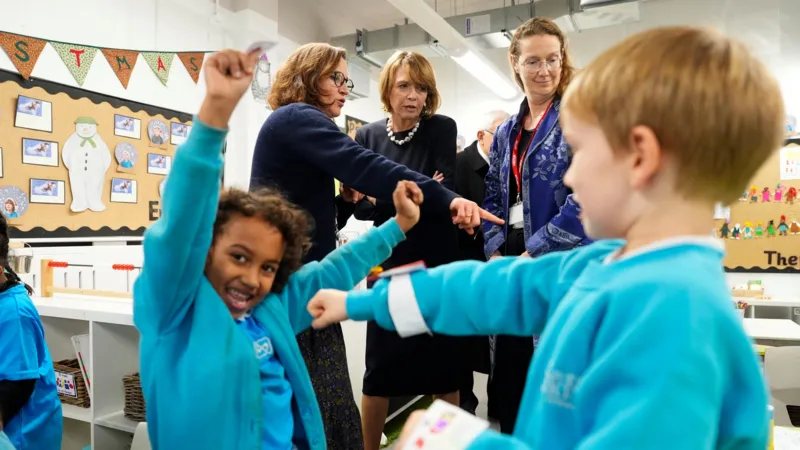
Elsewhere in London, Ms. Budenbender visited Judith Kerr Primary School in the southeast, honoring the German-born author of The Tiger Who Came to Tea. And in the days ahead, the president would travel to Coventry Cathedral’s ruins—bombed by Germany during World War II—to lay a wreath, just as King Charles had done in Hamburg earlier that year, remembering the German civilians killed by Allied raids.
Outside the castle gates, not everyone welcomed the spectacle. Anti-monarchy protesters had hoped to display banners along the procession route, but police asked them to move to a designated area, preventing them from using loudhailers near the horses. The campaign group Republic called it “a disgraceful attack on free speech,” though police maintained they had simply facilitated a peaceful demonstration without disruption.
But inside St George’s Hall, beneath the glow of thousands of lights and the towering German fir, the evening belonged to reconciliation and renewal—a celebration of shared history, shared values, and shared hopes for a more stable future.
Photos credits: PA Media/Reuters