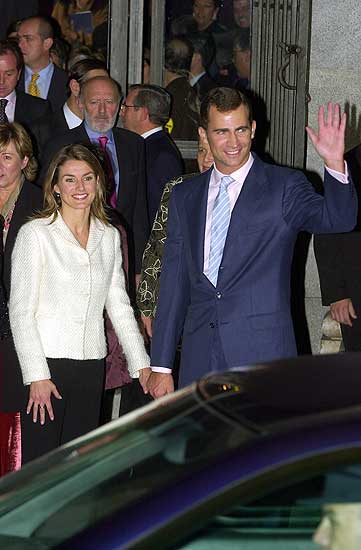


King Felipe VI and Queen Letizia brought a piece of Spain’s dynastic history into the present when they visited the Museo Nacional del Prado in Madrid with Austria’s Federal President Alexander Van der Bellen and his wife, Doris Schmidauer, on 25 November. Their visit centred on Mariana de Austria, an exhibition devoted to one of the most politically consequential women of the Spanish Habsburg monarchy.
The royal visit formed part of Van der Bellen’s working visit to Spain. The Spanish Royal Household said King Felipe also received the Austrian president at the Zarzuela Palace, after which the King and Queen hosted a lunch in honour of the visiting couple. At the Prado, the four guests viewed a display that considers how Mariana’s public image was shaped and circulated during several distinct stages of her life.
A queen whose portraits carried political weight
Mariana of Austria (1634–1696) was born an Austrian Habsburg archduchess and became the second wife of King Philip IV of Spain. After Philip’s death in 1665, she served as regent for their young son, Charles II. Her position placed her at the centre of government during a period of dynastic uncertainty, and the way she was represented to other European courts was more than a matter of personal image: it was part of how her authority was communicated.
The Prado’s exhibition brings together more than 100 works, including paintings, sculptures, prints and decorative arts. Works associated with Diego Velázquez, Juan Bautista Martínez del Mazo, Juan Carreño de Miranda and Claudio Coello help trace the changing visual language used to present Mariana first as an archduchess and queen consort, then as regent and queen mother. The display also includes loans from collections beyond Spain, including Vienna’s Kunsthistorisches Museum.
According to the Spanish Royal Household, the exhibition is arranged around four stages: Mariana’s journey from archduchess to queen, her years as queen consort, her regency and her later role as queen mother. This structure allows visitors to see how royal portraiture adapted as her responsibilities and political circumstances changed. It also places her within a longer Habsburg tradition in which women of the dynasty used visual representation to express rank, continuity and influence.
A shared Spanish and Austrian history
The presence of the Austrian president gave the occasion an additional historical dimension. Mariana was born into the Austrian branch of the Habsburg family before her marriage connected her to the Spanish monarchy. The exhibition therefore offers a cultural point of contact between the two countries, while highlighting a woman whose role in seventeenth-century government has often been less familiar to general audiences than the kings around her.
The Prado describes the project as part of its El Prado en femenino initiative, which brings greater attention to women’s contributions to art and cultural history. In Mariana’s case, the focus is not simply on the portraits as works of art, but on the political purpose they served: making a female ruler’s authority visible in a world where power was commonly expressed through dynastic imagery.
Mariana de Austria opened to the public on 26 November 2026 and is scheduled to run until 28 March 2027. The exhibition was organised by the Museo Nacional del Prado with the Fundación AXA. Visitors can find practical information and the exhibition details through the Prado Museum’s official website.
Sources
- Spanish Royal Household: King Felipe VI and Queen Letizia visit the “Mariana de Austria” exhibition with the Austrian president, 25 November 2026.
- Museo Nacional del Prado and Fundación AXA: exhibition press release.
- Spain’s official tourism portal: exhibition dates and visitor information.
Photos credits: source of images.